Olivier Guaitella is a researcher of the Non Thermal Plasma group from Laboratory of Plasma Physics in Ecole Polytechnique near Paris. He has received is PhD degree in Physics in 2006 at École Polytechnique, member of Paris Saclay University. His main research interests are focus on plasma surface interactions and their influence on non-equilibrium plasma kinetics at elevated pressure. This work finds applications for indoor air treatment, Plasma/catalyst coupling, plasma in liquids, plasma jets and more recently CO2 recycling after spending a one year secondment in the group of Richard Engeln at Eindhoven University of Technology in 2014. He has also a strong interest in the development of new diagnostics techniques and has especially an expertise in infrared absorption techniques. He is member of the steering committee of the french non thermal plasma network since 2013.
Tomáš Hoder is a professor at Masaryk University, Brno, Czechia, and head of the research department Plasma Modelling and Data Integration at the Leibniz Institute for Plasma Science and Technology (INP), Greifswald, Germany. His research focuses on low-temperature plasmas, their applications and diagnostics, particularly fast ionisation phenomena and non-equilibrium processes in non-thermal plasmas, using electrical, optical emission or laser-aided spectroscopic techniques. High-resolution experiments are used for advanced model validation. He also investigates memory effects, stochastic properties of plasmas, and plasma–liquid interactions. As a visiting scientist, he has collaborated with the University of Greifswald, the Institute of Plasma Physics of the Czech Academy of Sciences in Prague, IAA-CSIC in Granada, and the LAPLACE laboratory in Toulouse.
Key publications:- M Mrkvičková, L Kuthanová, P Bílek, A Obrusník, Z Navrátil, P Dvořák, I Adamovich, M Šimek, T Hoder 2023 Plasma Sources Sci. Technol. 32 065009
DOI https://doi.org/10.1088/1361-6595/acd6de
- T Hoder, Z Bonaventura, A Bourdon, M Šimek J. Appl. Phys. 117, 073302 (2015)
https://doi.org/10.1063/1.4913215
- T Hoder, R Brandenburg, R Basner, K-D Weltmann, K V Kozlov, H-E Wagner 2010 J. Phys. D: Appl. Phys. 43 124009
DOI 10.1088/0022-3727/43/12/124009
Sylvain Iséni (GREMI Orléans, France)
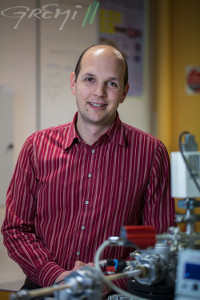
Academic Biography I am a Senior Tenured Researcher at the French National Center for Scientific Research (CNRS). My academic journey began at the University of Orléans (France), where I earned both a Master of Science degree and an engineering diploma in 2011. In 2012, I embarked on my doctoral studies at the Leibniz Institute for Plasma Science and Technology (INP Greifswald, Germany). I was awarded a PhD in Physics in 2015 from the University of Greifswald, with a dissertation focused on laser diagnostics of atmospheric pressure plasma jets for biomedical applications. Currently, I am affiliated with the Research Group in the Energetics of Ionized Media (GREMI), a joint laboratory of CNRS and the University of Orléans, France. In may 2024, I obtain the Habilitation degree.
Research Interests My research centers on non-equilibrium (non-thermal) plasmas and their applications in environmental and biological contexts. This includes the development of innovative micro-plasma sources and the investigation of fundamental processes in discharges and plasma-liquid interactions. Key areas of study encompass induced electric fields, electron dynamics, radiation transfer, and non-equilibrium chemical kinetics—particularly those governing the generation of highly reactive species. I have extensively studied guided ionization waves produced by dielectric barrier discharges and plasma jet devices (APPJ). Recently, my focus has expanded to micro-discharges, exploring their potential as a competitive approach for green energy processes using plasma technologies, such as silicon-based micro-hollow cavity discharge (MHCD). My work also involves plasma diagnostics, with a strong emphasis on Optical Emission Spectroscopy (OES) to investigate key plasma parameters, including electric field, electron density, neutral gas temperature, and hydrodynamics. Since 2024, I have returned to my initial field of expertise: laser diagnostic techniques for reactive gases and weakly ionized plasmas, particularly to measure absolute densities of reactive species.
Key publications:- Iséni S, Sretenović GB, Kovačević VV, Bonifaci N, Pichard C, Cachoncinlle C, et al. Inception and growth of an electrodeless atmospheric double-headed streamer. Phys Rev E. 2025 Feb 13;111(2):L023202. Located at: hal-04947718; https://hal.science/hal-04947718. doi:10.1103/PhysRevE.111.L023202
- Iseni S, Nishime TMC, Gerling T. Transition from afterglow to streamer discharge in an atmospheric capacitively coupled micro-plasma jet. Appl Phys Lett. 2024 Nov 11;125(20):203502. Located at: hal-04779798; https://hal.science/hal-04779798. doi:10.1063/5.0232114
- Iseni S, Pichard C, Khacef A. Monitoring hydrodynamic effects in helium atmospheric pressure plasma jet by resonance broadening emission line. Appl Phys Lett. 2019 Jul 15;115(3):034102. Located at: hal-02187494; https://hal.archives-ouvertes.fr/hal-02187494. doi:10.1063/1.5110714
Holger Kersten (Christian-Albrechts-Universität Kiel, Germany)
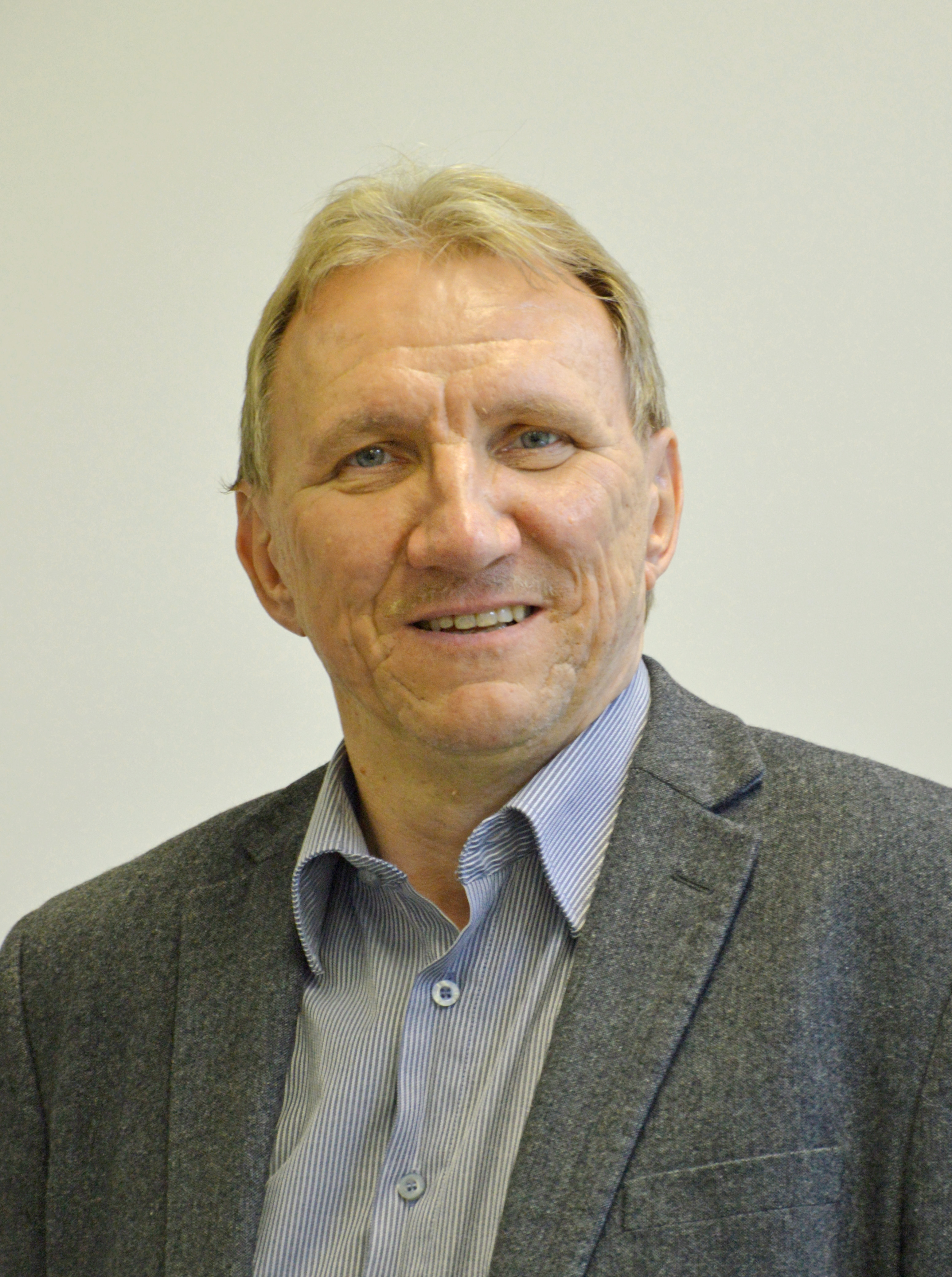
Holger Kersten is a Professor at the Institute of Experimental and Applied Physics at University of Kiel, Germany since 2006. Prior Professor Kersten was the head of the plasma processes group at the Leibniz Institute for Plasma Science and Technology (INP Greifswald) in Greifswald, Germany. The focus of his research includes basic studies and diagnostics on the interaction of plasmas with surfaces, complex plasmas and their applications in plasma technology. In particular, Kersten is working in plasma diagnostics by non-conventional methods as calorimetric probes and force probes for the determination of energy and momentum fluxes. Since a few years his research interest is also related to historical aspects of gas dicharges and plasma physics. In 1999, he received the Greifswald Plasma Physics Prize in recognition of his research and in 2025 the Rudolf-Jaeckel award of the German Vacuum Society. Professor Kersten was the president of the German Society for Plasma Technology from 2009 to 2013. From 2015 until 2019 and since 2025 again he is an Editor-in-Chief of the European Physical Journal D (EPJD). In 2019 Kersten was the chair of the ICPIG conference and in 2024 of the PSE conference.
Key publications:- Experimental unraveling the energy flux originating from a DC magnetron sputtering source. S Gauter, F Haase, H Kersten, Thin Solid Films 669(2019), 8-18. (doi: 10.1016/j.tsf.2018.10.021)
- Nanoparticle forming reactive plasmas: A multidiagnostic approach. A Hinz, E von Wahl, F Faupel, T Strunskus, H Kersten, Eur. Phys. J. D 72(2018), 91. (doi: 10.1140/epjd/e2017-80372-6)
- Foundations of measurement of electrons, ions and species fluxes towards surfaces in low-temperature plasmas. J Benedikt, H Kersten, A Piel, Plasma Sources Sci. Technol. 30(2021), 033001. (doi:10.1088/1361-6595/abe4bf)
Stephanos Konstantinidis (University of Mons, Belgium)
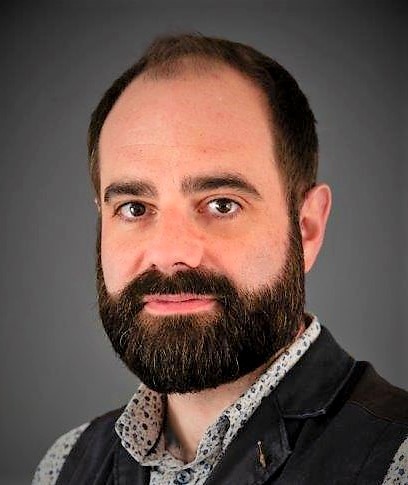
Stephanos Konstantinidis was born in Athens in 1978. He is currently Research Director at the National Fund for Scientific Research (FNRS, Belgium) and professor at the University of Mons in Belgium. During his doctoral thesis (UMONS 2004), Stephanos contributed to the fundamental understanding of ionized magnetron sputter deposition technology, in particular towards the development of High-Power Impulse Magnetron Sputtering (HiPIMS) processes.
At ChIPS lab, he studies plasma-surface interactions and thin film deposition by combining both advanced plasma analysis and surface characterization methods. He’s also developing sputtering-based processes for the synthesis of nanomaterials.
Key publications:- High power pulsed magnetron sputtering: a review on scientific and engineering state of the art, K. Sarakinos, J. Alami and S. Konstantinidis , Surf. Coatings Technol. 204, 1661–1684 (2010).
- Oxygen vacancy stabilized zirconia (OVSZ); a joint experimental and theoretical study. M. Raza, S. Konstantinidis et al, Scripta Materialia, 124, 26–29 (2016).
- Sputtering onto liquids: a critical review, A. Sergievskaya, A. Chauvin and S. Konstantinidis, Beilstein J. Nanotechnol. 13, 10–53 (2022).
Tony Murphy (CSIRO, Australia)
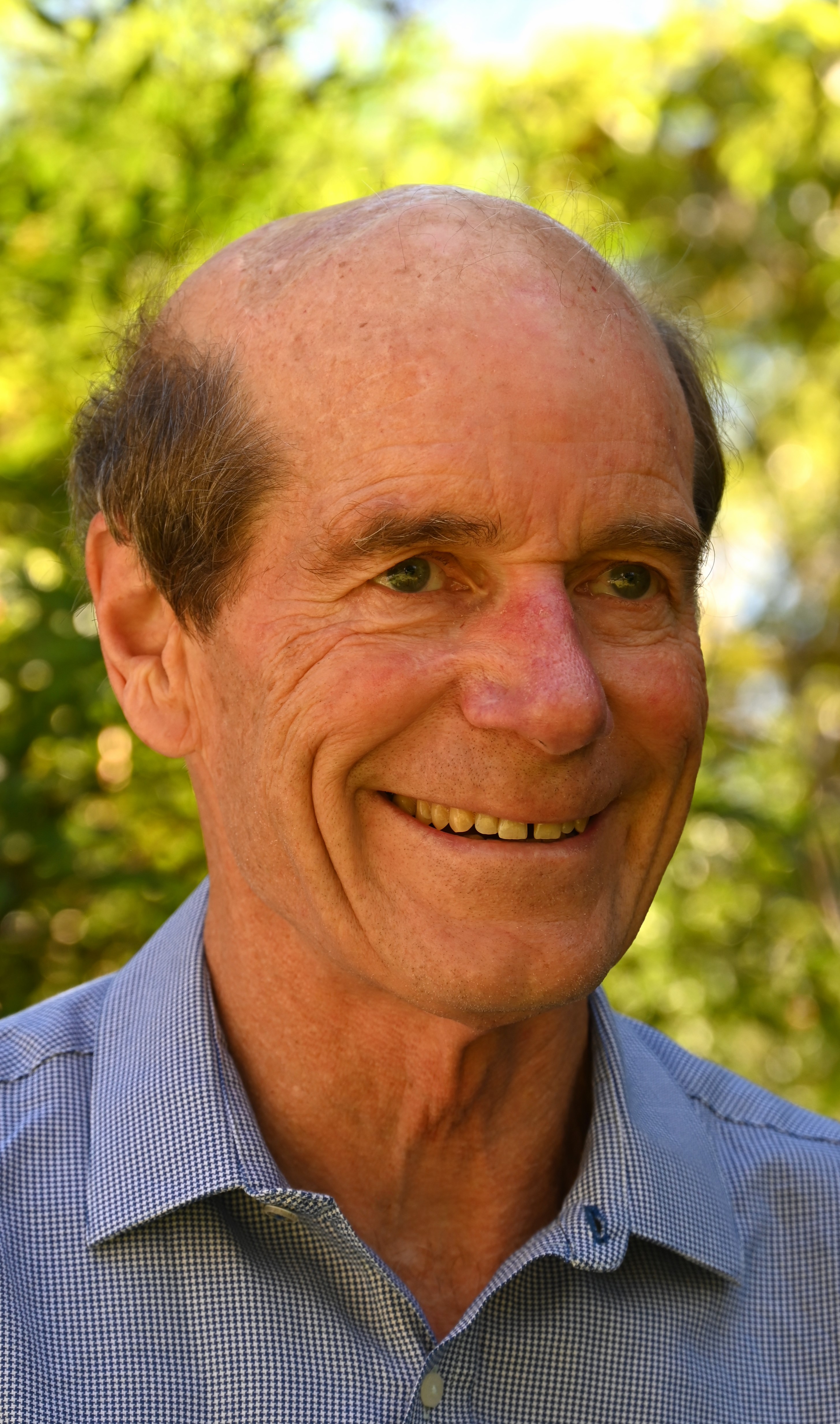
Tony Murphy was born in Sydney, Australia, too many years ago. He received a PhD in Physics from the University of Sydney and subsequently completed a postdoc at Max-Planck-Institut für Plasmaphysik in Munich. Since 1989, he has worked at CSIRO, Australia’s leading government research organisation, where he is now a Chief Research Scientist. (A prize will be awarded to all who can say what CSIRO stands for.) Tony’s main research area is thermal plasma processes, including arc welding, metallurgical applications, waste treatment, and plasma property calculation. In the past few years, he has also been active in plasma catalysis. He was a member of the team that developed the PLASCON waste destruction process and has led plasma modelling projects with several companies, including General Motors, Boeing, and China Rail and Rolling Stock Corporation. He has published over 300 refereed journal papers and has been awarded research medals and prizes by the International Plasma Chemistry Society, European Physical Society, Association of Asia-Pacific Physical Societies, Institute of Physics (UK), Australian Academy of Science, Australian Institute of Physics, NSW Government and Royal Society of NSW. He is Editor-in-Chief of Plasma Chemistry and Plasma Processing, an Associate Editor of Journal of Manufacturing Processes, and a member of the Editorial Boards of Journal of Physics D: Applied Physics, Reviews of Modern Plasma Physics, Welding in the World and Plasma Science and Technology; you are encouraged to submit your best work to these journals.
Key publications:- Foundations of high-pressure thermal plasmas. A B Murphy, D Uhrlandt, Plasma Sources Sci. Technol. 27 063001 (2018).
- A perspective on arc welding research: the importance of the arc, unresolved questions and future directions. A B Murphy, Plasma Chem. Plasma Process. 35 471–489 (2015).
- Thermodynamic properties and transport coefficients of arc lamp plasmas: argon, krypton and xenon. A B Murphy, E. Tam, J. Phys. D: Appl. Phys. 47 295202 (2014).
Marina Prenzel (Ruhr-University Bochum, Germany)
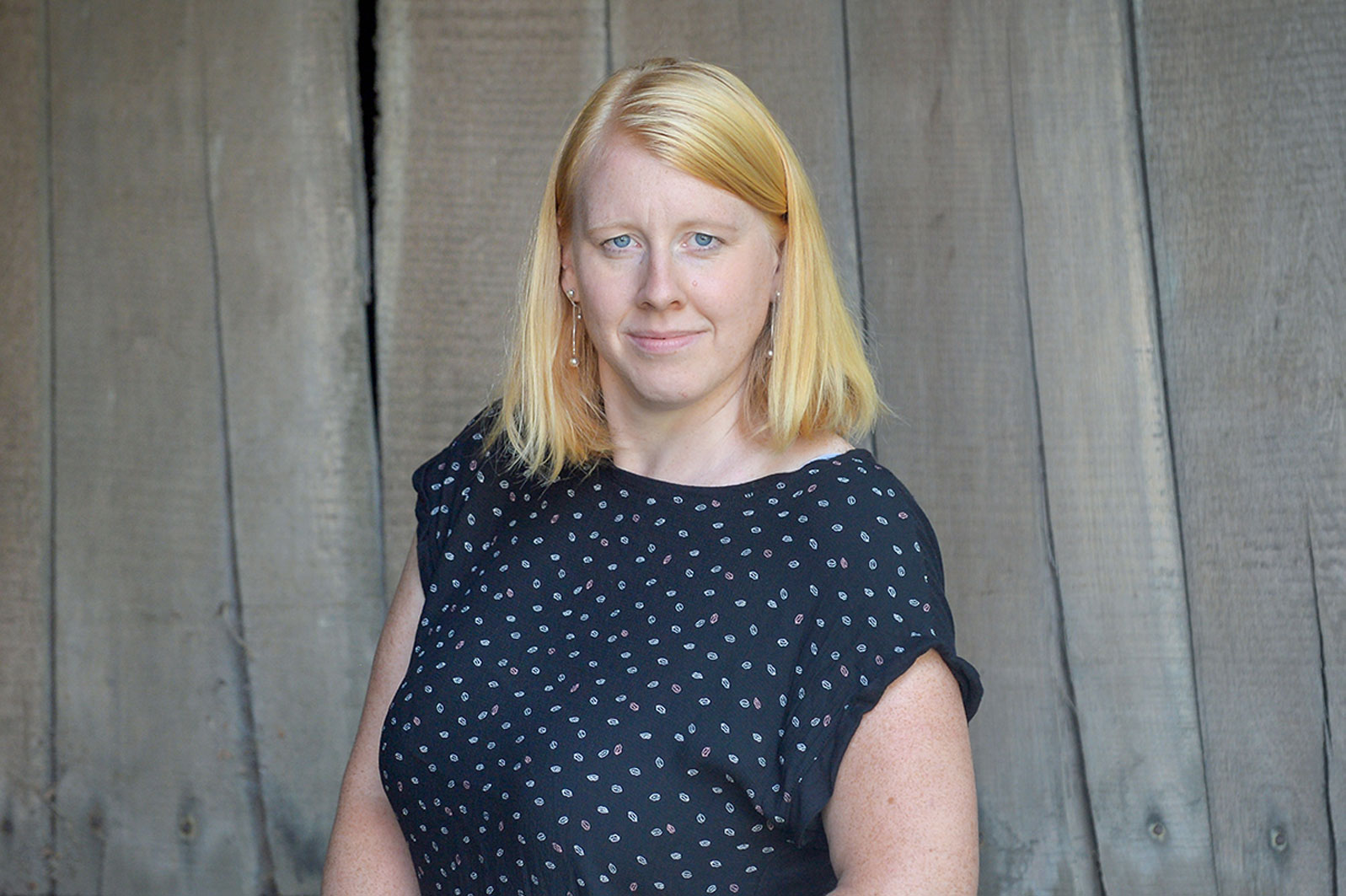
Marina Prenzel is Science Manager of the Research Department 'Plasmas with Complex Interactions' at Ruhr-Universität Bochum (RD Plasma). She received her Ph.D. in physics in 2013 on a study of reactive magnetron sputtering. For three years she worked as a Potdoc at the Max-Planck-Institute for Chemical Energy Conversion in Mülheim (Germany) and moved at the beginning of 2017 back again to RUB, where she is responsible for the scientific organisation of the RD Plasma.
Key publications:- Investigation of different pre-treated multi-walled carbon nanotubes by Raman spectroscopy. P Düngen, M Prenzel, C Van Stappen, N Pfänder, S Heumann, R Schlögl, Materials Sciences and Applications 8 (8), 628-641 (2017)
- Formation of crystalline gamma-Al2O3 induced by variable substrate biasing during reactive magnetron sputtering. M Prenzel, A Kortmann, A von Keudell, F Nahif, J M Schneider, M Shihab, R P Brinkmann, J. Phys. D.: Appl. Phys. 46 (8), (2013) 084004
- Ion-induced secondary electron emission of oxidized nickel and copper studied in beam experiments. R Buschhaus et al 2022 Plasma Sources Sci. Technol. 31 025017
Antonio Tejero-del-Caz (University of Cordoba, Spain)
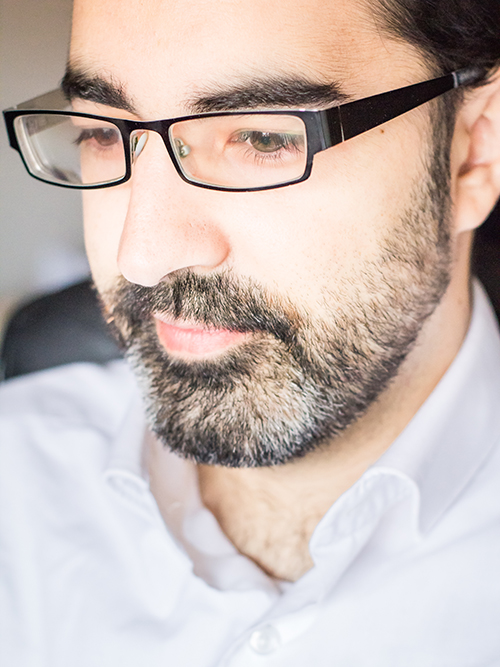
Antonio Tejero-del-Caz was born in Córdoba, Spain, on October 15th 1987. He received his PhD degree in Physics in June 2016, from the University of Córdoba (Spain). Antonio Tejero-del-Caz specialised in high-performance computing, GPGPU, and the development of CUDA enabled PIC algorithms for the study of sheaths in low pressure plasma and plasma-solid interaction. From September 2016 he is a postdoctoral researcher at Instituto de Plasmas e Fusão Nuclear within Instituto Superior Técnico (Portugal) where he is working in the N-Plasmas Reactive: Modelling and Engineering (N-PRiME) group. His current research is focused in the modelling and simulation of low-temperature plasmas of interest for biological and environmental applications. He is the main developer of the LisbOn KInetics (LoKI) tool suit, a set of computational tools to obtain numerical solutions of the electron Boltzmann equation (LoKI-B) and its self-consistent coupling with a global model to study the plasma chemistry (LoKI-C).
Key publications:- Experimental radial motion to orbital motion transition in cylindrical Langmuir probes in low pressure plasmas. J M Díaz-Cabrera, J Ballesteros, J I F Palop, A Tejero-del-Caz, Plasma Sources Sci. Technol. 24 (2015) 25026. doi:10.1088/0963-0252/24/2/025026.
- Radial-to-orbital motion transition in cylindrical Langmuir probes studied with particle-in-cell simulations. A Tejero-del-Caz, J I Fernández Palop, JM Díaz-Cabrera, J Ballesteros, Plasma Sources Sci. Technol. 25 (2016) 01LT03. doi:10.1088/0963-0252/25/1/01LT03
- Ion injection in electrostatic particle-in-cell simulations of the ion sheath. A Tejero-del-Caz, J I Fernández Palop, J M Díaz-Cabrera, G F Regodón, R Carmona-Cabezas, J Ballesteros, J. Comput. Phys. 350 (2017) 747–758. doi:10.1016/j.jcp.2017.09.018
Achim von Keudell (Ruhr-University Bochum, Germany)
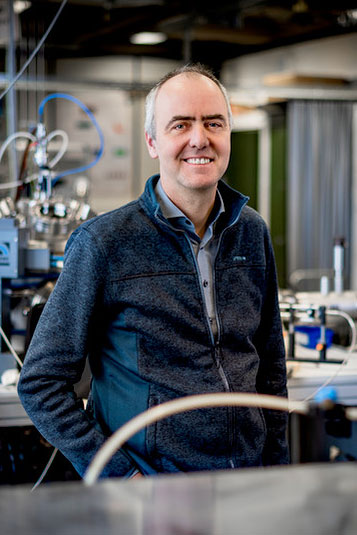
Achim von Keudell is professor for experimental physics at Ruhr-University Bochum since 2003. Before, he was staff scientist at the Max Planck Institute for Plasma Physics in Munich.
A. von Keudell specialised in plasma and surfaces physics. His experience encompasses in-situ ellipsometry, infrared spectroscopy and treatment of surfaces with plasma discharges. His group has been the first to quantify elementary surface processes in plasma surface interactions involving hydrocarbon radicals and hydrogen atoms. These serve as model experiments for the understanding of thin film growth in glow discharges.
The projects until 2010 focussed on plasma technology particularly with regard to clusters in plasmas and plasma sterilisation. Since a few years, the research on reactive microplasmas developed with the emphasis on the fundamental understanding of the reaction chemistry as well as on on reactive magnetron sputtering and HPPMS discharges.
Key publications:- Direct insertion of SiH3 radicals into strained Si-Si surface bonds during plasma deposition of hydrogenated amorphous silicon films. A von Keudell, J R Abelson, Phys. Rev. B. 59, 5791 (1999)
- Elementary processes in plasma-surface interaction:H-atom and ion-induced chemisorption of methyl on hydrocarbon film surfaces (review). A von Keudell, W Jacob, Progress in Surface Science 26, 21-54 (2004)
- Impact of catalytic surfaces on atmospheric RF plasma dynamics
S. Yu, A. von Keudell, J. Phys. D: Applied Phys. 59, 075203 (2025)

